Looking how to optimise your website for search engines? Look no further! In this post I’ll explain some of the key ways to optimise your website for your most valuable keywords.
Let’s get started!
How To Optimise Your Website For Search Engines – Identify Your “Seed” Keyword
Your website might be one of hundreds or even thousands in your key topic area (or niche). This means your website may or may not rank for your keywords, given the level of competition in your field and you domain authority and ranking ability with Google.
The first thing to do is identify your main keywords so you can optimise your website for them as soon as possible. Your main keywords are the ones which most quickly and easily identify your business purpose to your target audience. For example, if you have a flower shop in Oldham, your main “seed” keywords would likely be “flower shop Oldham”, or “florist (in) Oldham”.
Once you have identified your “seed” keywords, you can find other keywords for which you can rank content more easily.
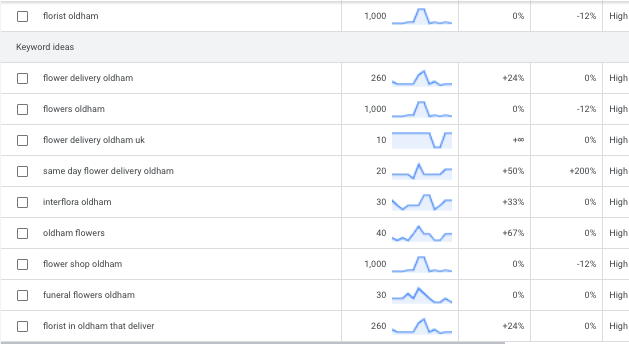
Here are some of the keywords I found using this keyword as the main “seed” keyword of “florist Oldham”.
How To Optimise Your Website For Search Engines – A Useful Plugin
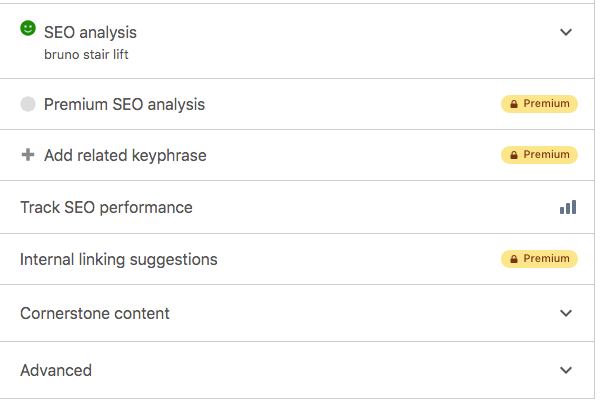
A useful plugin here is the Yoast SEO plugin. It’s free and you can download it here. Yoast SEO helps you target specific pages and posts for your chosen keywords. This in turn helps the SEO “bots” know which page you want to rank for individual keywords. So if you want to rank you main page for a certain keyword, it’s useful to make sure you use that keyword in your main page. Use it throughout the page, using it in headings and images. Yoast SEO helps you do this by letting you know where you’re missing opportunities in your content to boost content for specific keywords.
Long Tail Keywords
Your website may not rank for your chosen keywords, especially if they are very short tail (e.g. two words long), and/or there is a lot of competition on Google for them. But if that’s an issue, you should go after other means of obtaining more traffic, such as with paid advertising and by getting a Google My Business listing. See my blog post how to increase traffic to my website.
If this is the case, and even when it isn’t, a good source of organic traffic is through long tail keywords. With long tail keywords, you can write posts for keywords with three, four or more keywords within a “chain”. For example, in the previous example of florist Oldham, the keyword planner threw up a longer tail keyword “same day flower delivery Oldham”. This is a keyword which you’re much more likely to rank for if you create some great content for it, optimising for that specific keyword. See also my post on finding low competition long tail keywords.
Deep Linking & Blog Clusters
Deep linking is a way to further optimise your pages and posts by linking back to them from newer posts and blogs. When you link back to them, use your keyword phrase in the link text. This lets Google, and other search “bots’ what keyword relates to that page and ultimately what to rank it for. Google changes its algorithms regularly so it’s worth checking up on the latest updates to get this right. So you may need to vary link text depending on their latest changes.
Deep linking can be used in conjunction with blog clusters. So if you want to rank a specific page, for example, you can create the page for your main keyword. Then, create longer tail derivatives for your blog posts, linking back to your target page, for which you want to rank your main keyword. So, for example, with “Florist Oldham”, you might create a main page targeting this keyword. Then, create long tail derivative pages/posts with long tail keyword titles. So for example, “florest in Oldham that deliver” is a longer tail derivative which showed up on Google’s keyword planner. Create a blog post targeting this keyword, and link back to your main page “Florest Oldham” using that keyword as the link text.
This passes “like equity” back to your main page which you want to rank for.
Summary
So there’s a couple of ways to optimise your website and get more traction from Google and other search engines. If that sounds like too much trouble, you can give me a shout and I’ll help you write optimised posts which get ranked on Google. This strategy does work but how well it works depends on a number of factors including your relative competition and standing with Google.
Visit my contact page to get in touch.